


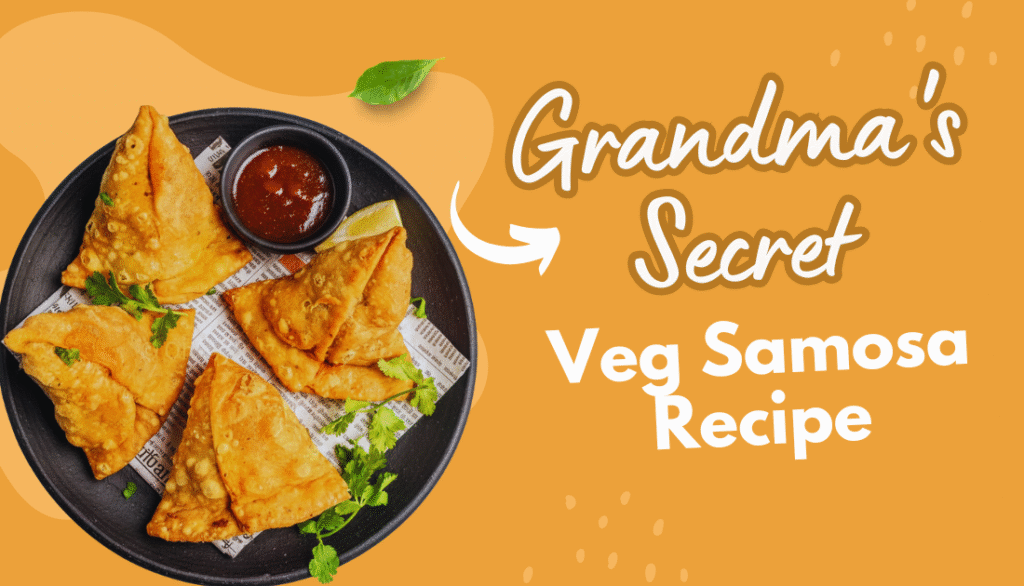
My grandma makes the best veg samosa in the entire world. I’m not exaggerating. Everyone in our family agrees, our neighbours agree, even the mailman who she forces to try them agrees. For years, I watched her make these golden, crispy triangles of heaven and honestly thought it was some kind of magic only grandmas possessed.
Last summer, I finally convinced her to teach me. “It’s time you learned,” she said, trying her apron. “Can’t have you eating store-bought samosas your whole life!” She looked genuinely horrified at the thought. So there I was, in her kitchen at 9 AM on a Saturday, ready to learn the secrets of the perfect veg samosa recipe. There’s no actual magic. Just technique, practice and a few sneaky tricks she’s been using for forty years. The best part? Her recipe for veg samosa is way simpler than those complicated ones you find online. “Why make it difficult?” she’d say while effortlessly rolling out dough. “Simple is best!”
Now I make her samosas at home and people actually ask me for the recipe! My friends can’t believe I learned to make proper samosas. So here I am, sharing Grandma’s secrets with you. She made me promise to tell everyone: “Don’t be scared! If my granddaughter can do it, anyone can!” (Thanks for the vote of confidence, Grandma.)

What do you need to make samosas?
Grandma’s ingredient list is refreshingly short. “No fancy things,” she always says. “Just good, simple ingredients.” Here’s what you need:
For the dough:
- 2 cups all-purpose flour (Grandma calls it maida)
- 4 tablespoons ghee or oil (Grandma uses ghee for flavor)
- 1 teaspoon carom seeds (ajwain) – “This is my secret!” she whispers every time
- 1 teaspoon salt
- About 1/2 cup water (add slowly!)
For the filling:
- 4 medium potatoes, boiled and mashed
- 1/2 cup green peas (frozen works perfectly)
- 1 teaspoon cumin seeds
- 1 teaspoon garam masala (“The good stuff, not the old jar from 2019!”)
- 1/2 teaspoon turmeric
- 1 teaspoon coriander powder
- Red chilli powder to taste
- Salt to taste
- 2 tablespoons chopped cilantro
- 1 tablespoon lemon juice
- 2 tablespoons oil
For frying:
- Oil (enough for deep frying)
The first time I saw this list, I was relieved. No weird ingredients I’d never heard of! Everything was already in Grandma’s kitchen and most of it was in mine too. She noticed my relief and laughed. “You thought it would be complicated? Making good food doesn’t need fifty ingredients. Just the right ones!”
Start making the dough
This is where Grandma revealed her first big secret. “The dough is everything,” she said seriously. “Get this wrong and your samosa will be sad and chewy. Get it right and it’ll be crispy and flaky.” No pressure, right?
Put your flour in a large bowl. Add the carom seeds and salt. Mix them around with your hand. Now add the ghee (or oil if you prefer). Here comes the important part that nobody tells you about. “Now rub,” Grandma instructed, showing me how to rub the ghee into the flour with my fingertips. “Rub until it looks like breadcrumbs. This takes time. Don’t rush!” She made me rub for about 5 minutes. My arms got tired, but she kept saying, “Keep going! This is what makes it flaky!”
To test if you’re done, she taught me this trick: take a small amount and squeeze it in your palm. If it holds together like a lump, you’re good. If it falls apart, keep rubbing. This step is crucial for that perfect crispy texture everyone loves about veg samosa. Now add water, little by little. Grandma hovered over me like a hawk when I did this part. “Not too much! Slowly!” she kept saying. The dough should be stiff, not soft. She compared it to playdough consistency, but firmer. I probably used about half a cup, but it depends on your flour.
Knead the dough just until it comes together. “Don’t overwork it,” Grandma warned. “30 seconds is enough. You’re not making bread!” She’s very particular about this. Over-kneading makes tough samosas and tough samosas make Grandma sad.
Cover the dough with a damp cloth and let it rest for 20-30 minutes. “The dough needs to relax,” Grandma explained. “Just like you need rest after working hard!” During this time, we made the filling.
The filling
Grandma’s filling is where all the flavor lives. “This is what people remember,” she said, heating oil in her favorite pan (the one she’s had for thirty years and refuses to replace).
First, she added cumin seeds to hot oil. “Listen for the sizzle!” she said. When they started crackling and smelling amazing, she added the peas and cooked them for about 2 minutes.
Then came all the spices. She added turmeric, garam masala, coriander powder, red chili powder and salt. The kitchen immediately smelled like every good Indian restaurant I’ve ever been to. “Stir quickly,” she instructed. “Spices burn fast!”
Now the mashed potatoes went in. Grandma doesn’t mash hers super smooth. “Some chunks are good! Gives texture!” She mixed everything together, pressing the potatoes down with her wooden spoon. We cooked it for about 3-4 minutes.
Off the heat, she added lemon juice and fresh cilantro. “Lemon juice is important. It brightens everything up!” She mixed it all and let it cool completely. “Never put hot filling in your samosa,” she warned. “It’ll make the dough soggy and impossible to seal. Patience!”
While it cooled, she made me taste it. “Always taste your filling!” she said. “Adjust the salt, the spice, make it perfect. This is your chance!” I added a tiny bit more salt, and she nodded approvingly.

How to make veg samosa?
This is where I was most nervous. The shaping! I’d seen Grandma do this a thousand times, making it look effortless. “Don’t worry,” she assured me. “Your first few won’t be perfect. Mine weren’t either!” (Hard to believe, honestly.)
The shaping part:
Divide the rested dough into 6 equal balls. Grandma eyeballs it, but I used a scale because I’m not at her level yet! Take one ball and roll it into a circle about 6-7 inches wide. “It doesn’t have to be perfectly round,” Grandma said when mine came out oval-shaped. “Samosas are forgiving!”
Cut the circle in half with a knife. You now have two semicircles. Each one becomes a samosa! This was Grandma’s shortcut that she learned from her mother.
Take one semicircle and dab a tiny bit of water along the straight edge. “Just a little! Too much makes it messy,” Grandma demonstrated. Form it into a cone shape, overlapping the edges. Press the overlapped part firmly to seal it. “Make sure the pointy bottom is closed tight, or your filling will leak out!”
Hold the cone in your hand (Grandma made this look so easy!) and fill it with about 2 tablespoons of the potato filling. “Don’t overfill!” she warned. “Leave space at the top!” I overfilled my first one and watched it burst open. Lesson learned!
Apply water on the inner edges of the opening. Press firmly to seal it into a triangle. “Press properly!” Grandma kept saying. “Any gaps and the oil gets inside while frying. Not good!”
We shaped all of them and placed them on a plate, covered with a damp cloth. “Don’t let them dry out,” Grandma said, like precious. babies.
The frying part:
This is where Grandma’s years of experience really showed. She heated oil in her deep pan. “Medium-low heat only!” she insisted. “High heat burns the outside and leaves the inside raw. Low heat makes them absorb too much oil. Medium-low is perfect!”
To test the temperature, she dropped a tiny piece of dough in. It sizzled and slowly rose to the top. “Perfect temperature!” she declared. If it browns immediately, the oil is too hot. If it sinks and doesn’t sizzle, it’s too cold.
She carefully slid 3 samosas into the oil. “Don’t overcrowd the pan. They need space to swim!” She turned them gently every minute or so. “Watch them turn golden, like sunshine!” It took about 4-5 minutes per side.
When they came out golden and crispy, she drained them on paper towels. The smell was incredible. I immediately reached for one and she slapped my hand away gently. “Wait two minutes! You’ll burn your mouth!” She was right, of course. Grandmas always are.

What to serve with samosas?
Grandma has strong opinions about this! “Samosas need chutney,” she declared. “It’s not optional!” In her world, serving samosas without chutney is basically a crime.
Her favorite combination is mint chutney and tamarind chutney. She makes both from scratch, but she admitted that store-bought ones work fine too. “Do what’s easy for you,” she said. “The important thing is to eat and enjoy!”
Her quick mint chutney recipe is so simple: blend fresh mint, cilantro, green chili, lemon juice, salt and a bit of water. Done in 5 minutes! “See? Not complicated!” she said triumphantly.
Sometimes she serves them with chai (Indian tea). “Hot samosas, hot chai, good company. What else do you need?” She usually makes a big batch when family comes over. They disappear in minutes! Last Diwali, she made 50 samosas. They were gone in half an hour. She should’ve made 100, she said later.
She also taught me about samosa chaat, where you break up the samosa, top it with chickpea curry, yogurt, chutneys and onions. “This is a meal!” she said. “Perfect for when you’re really hungry!”
Is it Vegan-friendly?
Grandma’s traditional samosa veg recipe uses ghee in the dough, which isn’t vegan. But she’s very practical. “Use oil instead of ghee,” she said with a shrug. “It still works perfectly fine!” The filling is already vegan since it’s just potatoes, peas and spices. “No dairy needed,” she confirmed. When frying, you’re using oil anyway. So yes, if you use oil in the dough instead of ghee, this recipe for veg samosa is completely vegan!
She told me that many families in India make it this way naturally, especially during fasting periods. “It’s traditional to make it without animal products sometimes,” she explained. “So it’s not weird or difficult. Just normal!” My vegan cousin tried Grandma’s oil-version samosas and couldn’t tell the difference from the ghee ones. “Both are good,” Grandma said. “Choose what works for you!”
Can you freeze them?
Oh, this was life-changing information! “Of course you can freeze them!” Grandma said, surprised I even asked. “How do you think I always have samosas ready when visitors come?”
She explained two methods:
Before frying:
Shape all your samosas and place them on a tray lined with parchment paper, not touching each other. Freeze for 2-3 hours until solid. Then transfer to a freezer bag. They keep for 2-3 months!
When you want to eat them, fry them straight from frozen. Don’t thaw! They’ll take a bit longer, about 6-7 minutes, but they turn out perfect. “This is how I always have samosas ready for unexpected guests!” Grandma revealed.
After frying:
You can also freeze already fried samosas. Let them cool completely, freeze in a single layer, then bag them. Reheat in the oven at 180°C (350°F) for about 10 minutes. They crisp up beautifully!
“Make extra, freeze them and you’ll thank yourself later,” Grandma advised. She’s right. I now make double batches and freeze half. It’s so convenient when I’m craving veg samosa but feeling lazy!
Want some now?
After learning Grandma’s recipe, I make samosas at least twice a month. Sometimes I mess up the shape, sometimes they’re not as perfect as hers, but they always taste good! “Practice makes perfect,” Grandma reminds me every time I show her photos of my attempts. The first batch I made alone at home took me about an hour. I kept texting Grandma with questions. “Is the dough supposed to be this stiff?” “How do I know when the oil is ready?” She patiently answered every message.
Now I can make them in about 40 minutes and they actually look like proper samosas! My friends are always impressed when I bring them to gatherings. “You made these?” they ask, amazed. I smile and think about Grandma saying, “See? Not so hard after all!” If you’re craving samosas but don’t want to make them, sure, go buy some from an Indian restaurant. But I promise you, once you try making them at home with Grandma’s method, you’ll be hooked. There’s something special about making them yourself.
If you’re craving samosas and don’t feel like cooking and you are in Spain visit Tamasha Playa Blanca or try their takeaway service.
Check out the Menu here.
Last Words
Learning how to make veg samosa from my grandma was one of the best decisions ever. Not just because I can now make amazing samosas, but because I got to spend time with her, learning her techniques and hearing her stories about learning from her mother.
“Cooking is about love,” she told me while we were cleaning up. “You make it with love, serve it with love and people feel that love when they eat it.” Cheesy? Maybe. True? Definitely.
So give this recipe a try! Your first batch might not be perfect (mine definitely weren’t), but they’ll still taste good. Each time you make them, you’ll get better. And who knows? Maybe one day you’ll be teaching your own grandkids or friends your “secret” samosa recipe!
Now go make some samosas. Grandma believes in you and so do I!
FAQ
How many calories in a veg samosa?
Grandma laughed when I asked her this. “I don’t count calories, I count happiness!” But since you asked, one samosa has about 150-180 calories. The veg samosa calories depend on how much oil it absorbs while frying. If you bake them instead, you’ll save about 50-60 calories per samosa!
Why did my samosas break while frying?
Grandma says this happens when the dough is too soft, you didn’t seal properly, or the oil is too hot. Make sure your dough is stiff, seal all edges well with water and fry on medium-low heat. Also, make sure your filling is completely cool before stuffing!
Can I bake samosas instead of frying?
“Yes, but they won’t be as crispy,” Grandma admitted. Brush them with oil and bake at 180°C/350°F for 20-25 minutes until golden. They’re still delicious, just different! “Healthier though,” she added. “Good for people watching their oil intake!”
How do I store leftover samosas?
Keep them in an airtight container in the fridge for up to 3 days. Reheat in the oven to make them crispy again. “Never microwave!” Grandma warned. “They’ll get soggy and sad. Use the oven!”
Can I use whole wheat flour?
Grandma says you can mix half whole wheat and half all-purpose flour. “100% whole wheat makes them less flaky and harder,” she explained. “But 50-50 is okay if you want it healthier!”